
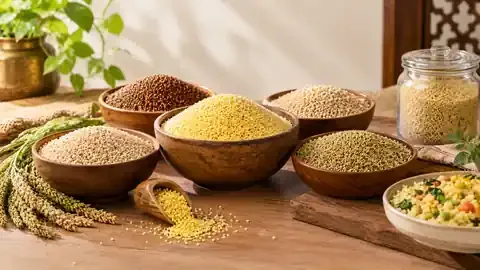
Millet Nutrition: Key Nutrients, Types and Health Benefits
Millets have been grown and eaten across India for thousands of years, and they are now returning to everyday plates for good reason. Millet nutrition brings together fibre, plant protein and essential minerals in a small, simple grain. This blog explains millet nutrition type by type, from calories and protein to calcium and iron, and shows how millets compare with rice and wheat so that each meal can be planned with confidence.
Why Millet Nutrition Matters in Everyday Meals
Every grain supplies energy, but millets add a great deal more. Most types of millets provide carbohydrates that release energy slowly, along with fibre, plant protein, B vitamins and minerals such as magnesium, phosphorus, iron and calcium. This broad mix is the reason millet nutrition draws so much interest from families who want daily meals to do more for them.
The nutritional value of millets also depends on the form in which they are eaten. Unpolished millets keep their bran, which is where much of the fibre and many minerals are found. Polishing and dehulling remove part of this outer layer, so whole, unpolished grain is the best way to enjoy the full range of nutrients.
Nutrient Values per 100g at a Glance
The millet nutrition chart below presents millet nutrition facts for each grain, showing millets nutrition per 100g of raw grain, with milled rice and whole wheat added for reference.
| Grain | Energy (kcal) | Protein (g) | Fibre (g) | Calcium (mg) | Iron (mg) |
|---|---|---|---|---|---|
| Ragi (finger millet) | 320 | 7.2 | 11.2 | 364 | 4.6 |
| Pearl millet (bajra) | 347 | 11.0 | 11.5 | 27 | 6.4 |
| Sorghum (jowar) | 334 | 10.0 | 10.2 | 28 | 3.9 |
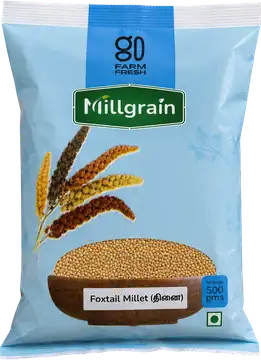
| Foxtail millet | 331 | 12.3 | 10.7 | 31 | 2.8 |
| Kodo millet | 331 | 8.9 | 6.4 | 15 | 2.3 |
| Little millet | 346 | 10.1 | 7.7 | 16 | 1.3 |
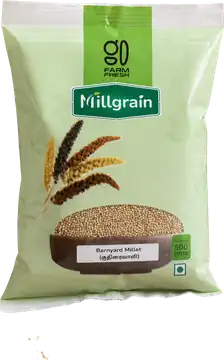
| Barnyard millet | 307 | 6.2 | 12.6 | 20 | 5.0 |
| Rice (raw, milled) | 356 | 7.9 | 2.8 | 8 | 0.6 |
| Wheat (whole) | 321 | 10.6 | 11.2 | 39 | 3.9 |
These values are approximate and come from Indian food composition data. Exact numbers vary with the variety and growing conditions of the grain, which is why the nutrition of millets differs from one type to the next. Cooked millets show smaller numbers per 100g because the grain absorbs water while cooking.
Millet Calories and Energy per Serving
In a millet vs rice comparison, millet calories are close to those of rice, with most raw millets providing between 307 and 347 kcal per 100g against 356 kcal for milled rice. A serving of about 45g of raw grain, which cooks into a generous bowl, gives roughly 140 to 155 kcal. One cup of cooked millet, around 174g, provides about 207 kcal.
The real difference lies in what accompanies those calories. Millets carry far more fibre than rice, so a bowl of porridge, upma, or khichdi feels filling and satisfying. Millet nutrition places fibre and minerals alongside those calories, which makes the grain a practical choice for daily cooking.
What Is the Millet Protein Content in Different Types?
Millet protein content ranges from about 6 to 12g per 100g of raw grain. The list is led by foxtail millet at 12.3g, followed by pearl millet at 11g, little millet at 10.1g, and sorghum at 10g. Kodo millet provides close to 9g, while ragi and barnyard millet offer about 6 to 7g.
Beyond quantity, millet protein includes useful amounts of essential amino acids. Pairing millets with dal, sambar or other pulses makes the protein more complete, which is why traditional combinations such as ragi with dal or foxtail millet with sambar work so well. Fibre is the other strength of this family, with most types providing 6 to 13g per 100g compared with under 3g in milled rice.
Which Millets Are Rich in Calcium and Iron?
Calcium and iron in millets vary widely by type, so choosing the right millet makes a difference. Among the millets, ragi stands apart with 364mg of calcium per 100g, which is about nine times the amount in whole wheat and many times more than rice. This explains why ragi porridge and ragi dosa are traditional favourites for growing children and for bone health in later years.
Pearl millet leads for iron at 6.4mg per 100g, with barnyard millet close behind at 5mg and ragi at 4.6mg. All three exceed milled rice at 0.6mg. Pairing iron-rich millets with a vitamin C source, such as a squeeze of lemon or a side of tomato chutney, helps the body use the iron more easily. Millets also provide magnesium and phosphorus, which support muscles, nerves and energy release.
What Are the Health Benefits of Millets?
The health benefits of millets come from the way millet nutrition combines fibre, protein and minerals. Here are the main ones:
- Digestive comfort: Millet fibre adds bulk and supports regular digestion, and the soluble fibre feeds helpful gut bacteria.
- Steady energy: The starch in millets digests slowly, which helps energy last through the morning.
- Gluten-free choice: Many families ask whether millets are gluten-free, and the answer is yes, which suits people who follow a gluten-free diet.
- Bone support: Ragi, with its calcium content, supports strong bones and teeth.
Research on millets continues to grow, and some of the findings on blood sugar and heart health come from small studies, so millet nutrition works best as part of a varied, balanced diet.
Are Millets More Nutritious Than Rice and Wheat?
A direct look at millets vs rice nutrition shows clear advantages for millets in fibre, calcium and iron. Milled rice offers 2.8g of fibre per 100g, while most millets provide 6g or more. Ragi also holds many times the calcium of rice, and pearl millet and barnyard millet hold many times the iron.
Against whole wheat, millets compare well on fibre and protein, and several types match or exceed it on iron. Ragi surpasses wheat for calcium, and all millets are naturally free of gluten, while wheat contains it. Rice and wheat remain good staples, and many families rotate them with several millets from a millet combo, so the plate gets the best of every grain. In short, millet nutrition gives families a practical way to add fibre and minerals without changing the way the meal is cooked.
How to Cook Millets Without Losing Nutrition?
Simple kitchen habits protect millet nutrition from the pot to the plate:
- Rinse the grain well, then soak it for six to eight hours. Soaking softens the grain and helps the body absorb minerals.
- Dry roast the grain lightly for a nutty aroma before cooking.
- Use the right amount of water, about two to three cups for each cup of grain, and cook until just tender.
- Try fermenting or sprouting, as in millet dosa, idli or sprouted ragi flour, which makes nutrients easier to use.
- Add vegetables, dal or curd to round out each meal.
Quick-cooking grains such as barnyard millet suit weekday khichdi and kheer, and 40 to 50g of raw grain per meal is a sensible serving for most adults. People managing diabetes, kidney conditions or other health needs can speak with a doctor or dietitian about portion size and the best types to choose.
Bringing Millet Nutrition to Your Daily Plate
Millets show how Pure Organic foods such as ragi, foxtail and kodo can bring fibre, protein and minerals to everyday meals. Each type has its own strength, with ragi for calcium, pearl millet for iron, and foxtail millet for protein, so rotating them through the week builds a well-rounded plate. Readers who wish to begin can swap rice for foxtail millet in one meal this week, add a bowl of ragi porridge at breakfast and notice how the day feels.
Frequently asked questions
How many calories are in a cup of cooked millet?
One cup of cooked millet, about 174g, provides around 207 kcal. The number varies slightly with the type of millet and the amount of water used in cooking.
How much millet is enough for one meal?
About 40 to 50g of raw grain, which cooks into a generous bowl, suits most adults. Pairing it with vegetables and dal makes the meal complete.
Can people who follow a gluten-free diet eat millets?
Millets are naturally free of gluten, so they suit a gluten-free diet. It helps to check labels on ready mixes, since some blends include wheat.
Do all millets have the same nutrition?
Each millet has its own strengths, such as calcium in ragi, iron in pearl millet and protein in foxtail millet. Rotating several types gives the widest range of nutrients.
Can millets be eaten every day?
Yes, millets can be part of daily meals for most healthy adults when eaten in sensible portions. Changing the type of millet through the week keeps the diet varied and interesting.